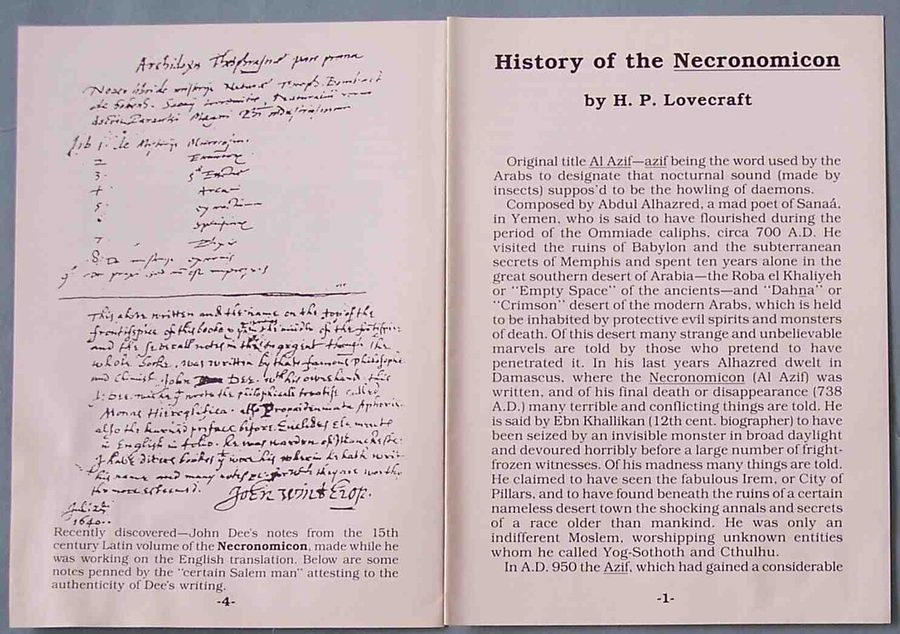
L’« Histoire du Necronomicon » de la main de Lovecraft — Dr Umm · CC BY 2.0 · Commons

Rapport
17 œuvres sur 222, 48 occurrences — 20ᵉ entité la plus citée du wiki sur 139. Parutions transcrites de 1928 (L’Appel de Cthulhu) à 1971 (L’Affaire Charles Dexter Ward), sur 13 œuvres datées. (dates des numéros transcrits, posthumes comprises.) Le foyer est History of the Necronomicon : 7 occurrences, 15 % du total. Densité : 2,3 occurrences pour 10 000 mots dans les œuvres concernées. Voisine surtout Abdul Alhazred : 20 rapprochements dans un même passage. 9 fiches du wiki y renvoient.
Écrit vers 730 à Damas sous le titre Al Azif, traduit en grec par Théodore Philétas en 950 sous le nom de Necronomicon, en latin par Olaus Wormius en 1228, interdit par le patriarche Michel, brûlé à Mayence.
Lovecraft a rédigé cette bibliographie complète — dates, traducteurs, exemplaires survivants et leurs dépositaires : British Museum, Bibliothèque nationale, Harvard, Buenos Aires, Miskatonic. C’est le cœur de sa méthode : l’objet impossible devient crédible par son appareil critique.
Il fonctionne moins comme un livre de sorts que comme un livre d’histoire vraie. Ce qu’il contient n’est pas magique, c’est exact — et c’est pour cela qu’il rend fou.
Attestations dans le corpus
| Œuvre | Année | Occurrences | Part |
|---|---|---|---|
| History of the Necronomicon | — | 7 | 15 % |
| Les Rêves dans la maison de la sorcière | 1933 | 6 | 12 % |
| L’Abomination de Dunwich | 1929 | 6 | 12 % |
| Celui qui chuchotait dans les ténèbres | 1931 | 5 | 10 % |
| Letter to Clark Ashton Smith, November 27, 1927 | — | 4 | 8 % |
| À travers les portes de la Clef d’argent | 1951 | 3 | 6 % |
| Hors du temps | 1933 | 2 | 4 % |
| L’Affaire Charles Dexter Ward | 1971 | 2 | 4 % |
| Le Descendant | 1938 | 2 | 4 % |
| L’Horreur dans le musée | 1933 | 2 | 4 % |
| Le Molosse | — | 2 | 4 % |
| Le Monstre sur le seuil | 1937 | 2 | 4 % |
| Autobiography | 1943 | 1 | 2 % |
| La Chevelure de Méduse | — | 1 | 2 % |
| L’Appel de Cthulhu | 1928 | 1 | 2 % |
| Le Journal d’Alonzo Typer | 1938 | 1 | 2 % |
| Celui qui hantait les ténèbres | 1936 | 1 | 2 % |
| Total | 48 |
Ce que le corpus en dit
Une phrase par œuvre, prise à l’endroit de la première occurrence.
History of the Necronomicon Original title Al Azif—azif being the word used by the Arabs to designate that nocturnal sound (made by insects) suppos’d to be the howling of daemons.
— History of the Necronomicon, 7 occurrences
But all these precautions came late in the day, so that Gilman had some terrible hints from the dreaded Necronomicon of Abdul Alhazred, the fragmentary Book of Eibon, and the suppressed Unaussprechlicken Kulten of von Junzt to correlate with his abstract formulae on the properties of space and the linkage of dimensions known and unknown.
— Les Rêves dans la maison de la sorcière, 6 occurrences
Almost eight feet tall, and carrying a cheap new valise from Osborn’s general store, this dark and goatish gargoyle appeared one day in Arkham in quest of the dreaded volume kept lender lock and key at the college library—the hideous Necronomicon of the mad Arab Alhazred in Dlaus Wormius’ Latin version, as printed in Spain in the Seventeenth Century.
— L’Abomination de Dunwich, 6 occurrences
I suppose you know all about the fearful myths antedating the coming of man to the earth—the Yog-Sothoth and Cthulhu cycles—which are hinted at in the Necronomicon.
— Celui qui chuchotait dans les ténèbres, 5 occurrences
In particular I have drawn up some data on the celebrated & unmentionable Necronomicon of the mad Arab Abdul Alhazred!
— Letter to Clark Ashton Smith, November 27, 1927, 4 occurrences
There were hints of it in the cryptical Pnakotic fragments, and a whole chapter in the forbidden Necronomicon of the mad Arab, Abdul Alhazred, had taken on significance when he had deciphered the designs graven on the silver key.
— À travers les portes de la Clef d’argent, 3 occurrences
Rencontres dans le texte
Entités dont une occurrence figure à moins de 320 signes de celle-ci — même phrase ou phrase voisine.
Chronology Al Azif written circa 730 A.D. at Damascus by Abdul Alhazred Tr to Greek A.D. 950 as Necronomicon by Theodorus Philetas Burnt by Patriarch Michael 1050 (i.e., Greek Text)—Arabic text now lost Olaus translates Gr. to Latin 1228 1232 Latin ed. (and Gr.) suppr. by Pope Gregory IX 14 …
What kept him from going with her and Brown Jenkin and the other to the throne of Chaos where the thin flutes pipe mindlessly was the fact that he had seen the name “Azathoth” in the Necronomicon, and knew it stood for a primal evil too horrible for description.
Croisements
Entités qui partagent ses œuvres, les plus spécifiques d’abord ; entre parenthèses, le nombre d’œuvres communes.
Personnages — Abdul Alhazred (13), Richard Upton Pickman (4), Harley Warren (3)
Divinités — Yog-Sothoth (9), Cthulhu (9), Shub-Niggurath (8), Tsathoggua (4), Azathoth (5)
Créatures — Les Grands Anciens (6), Les Anciens (4)
Lieux — Yuggoth (7), La Nouvelle-Orléans (5), Salem (8), Arkham (8), Le plateau de Leng (5), Université Miskatonic (6), Boston (7), R’lyeh (3)
Objets — Le Livre d’Eibon (5), Unaussprechlichen Kulten (5), Les Manuscrits pnakotiques (6)
Thématiques — La conscience emprisonnée (3), Le document comme preuve (3), L’architecture non euclidienne (2)
Époques — La Nouvelle-Angleterre coloniale (2)
Cycles — Le mythe de Cthulhu (4)
Entourage — Clark Ashton Smith (5)
Dans les revues
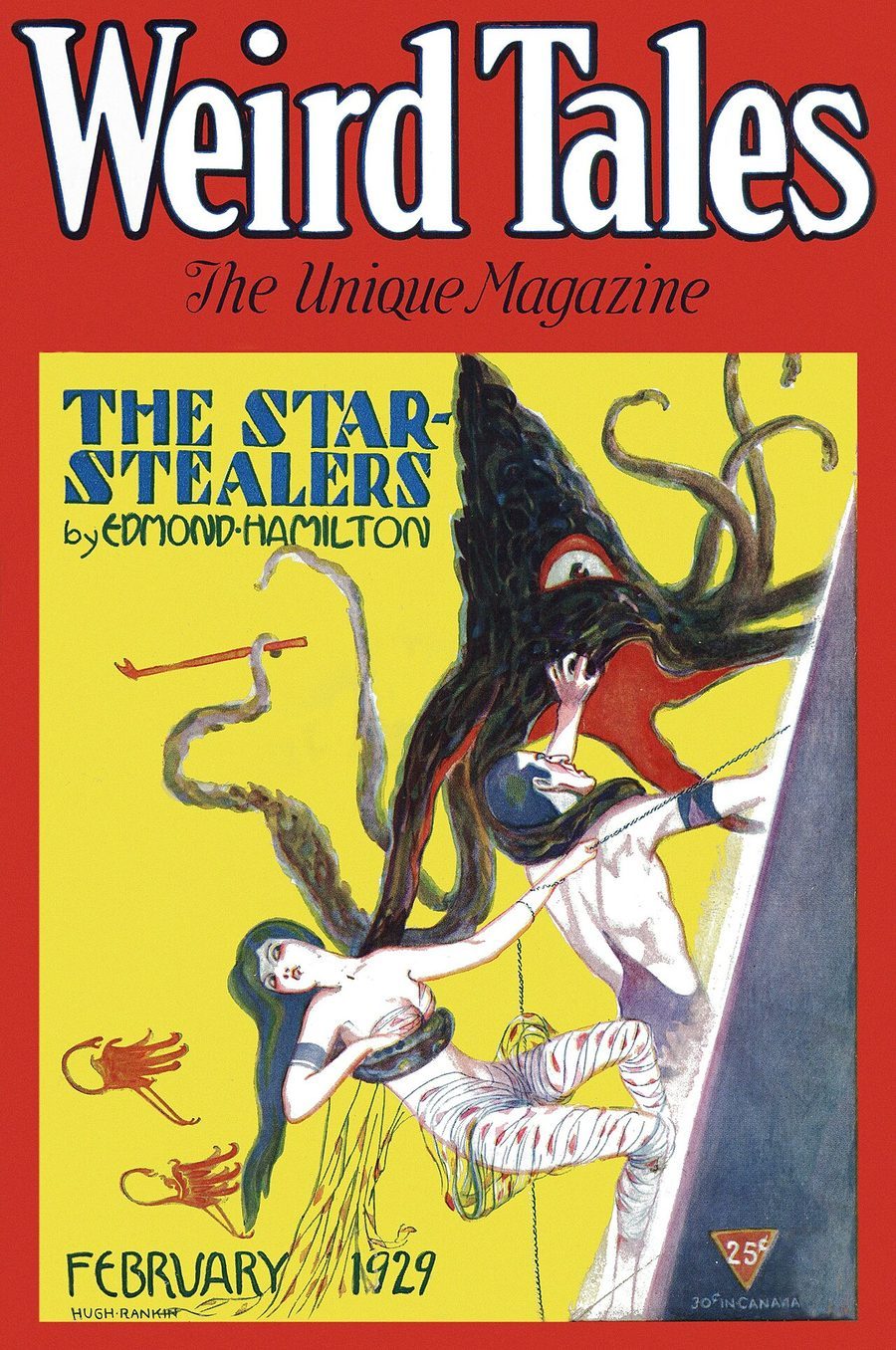
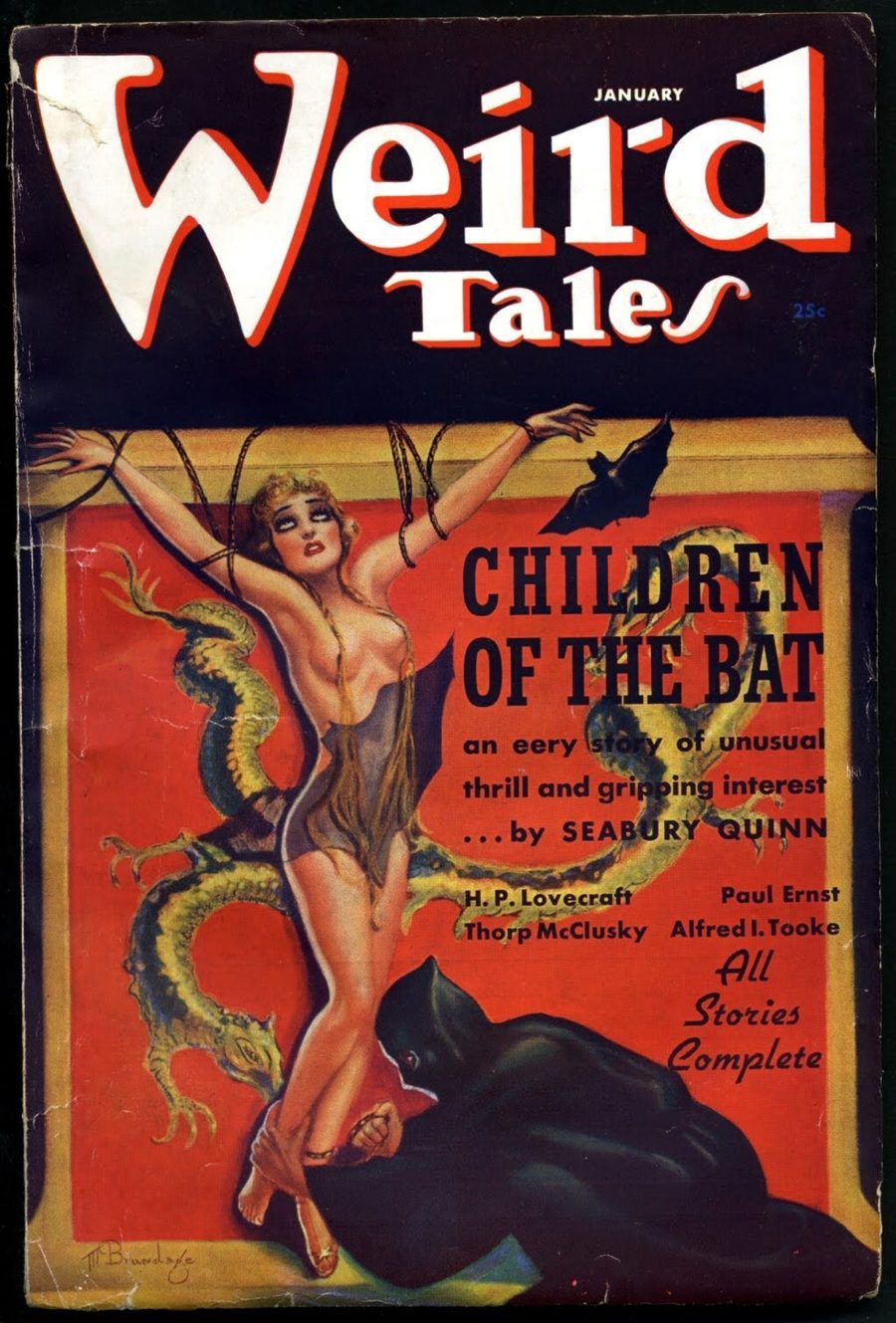
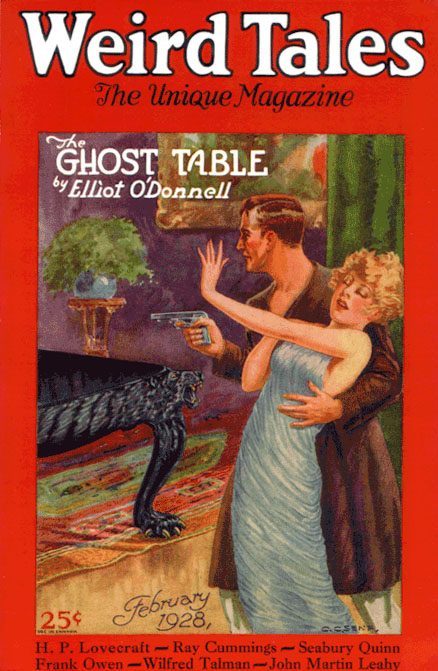
L’Abomination de Dunwich — Weird Tales, 1929 (numéro de l’année, pas forcément celui-ci) · Le Monstre sur le seuil — Weird Tales, janvier 1937 · L’Appel de Cthulhu — Weird Tales, 1928 (numéro de l’année, pas forcément celui-ci)
Fiches qui renvoient ici
Abdul Alhazred · Cthulhu · Henry Armitage · Irem · Le document comme preuve · Le savoir interdit · Université Miskatonic · Wilbur Whateley · Yog-Sothoth