Rapport
11 œuvres sur 222, 29 occurrences — 42ᵉ entité la plus citée du wiki sur 139. Parutions transcrites de 1928 (Le Dernier Test) à 1971 (L’Affaire Charles Dexter Ward), sur 9 œuvres datées. (dates des numéros transcrits, posthumes comprises.) Le foyer est L’Abomination de Dunwich : 13 occurrences, 45 % du total. Densité : 1,8 occurrence pour 10 000 mots dans les œuvres concernées. Voisine surtout Les Grands Anciens : 16 rapprochements dans un même passage. 2 fiches du wiki y renvoient.
« Yog-Sothoth connaît la porte. Yog-Sothoth est la porte. Yog-Sothoth est la clef et le gardien de la porte. » La formule du Necronomicon citée dans L’Abomination de Dunwich dit l’essentiel : Yog-Sothoth n’est pas dans le temps et l’espace, il leur est coextensif.
D’où sa fonction : il est ce par quoi on passe. Les sorciers l’invoquent pour franchir les seuils, et le prix se paie en descendance — les jumeaux Whateley sont ses fils. Randolph Carter, lui, l’atteint par la voie du savoir plutôt que par celle de l’engendrement.
C’est la divinité la plus abstraite du corpus, et sans doute la plus proprement mathématique : une entité définie par une topologie, non par une apparence.
Attestations dans le corpus
| Œuvre | Année | Occurrences | Part |
|---|---|---|---|
| L’Abomination de Dunwich | 1929 | 13 | 45 % |
| L’Affaire Charles Dexter Ward | 1971 | 7 | 24 % |
| Autobiography | 1943 | 1 | 3 % |
| History of the Necronomicon | — | 1 | 3 % |
| Letter to Clark Ashton Smith, November 27, 1927 | — | 1 | 3 % |
| Celui qui hantait les ténèbres | 1936 | 1 | 3 % |
| L’Horreur dans le musée | 1933 | 1 | 3 % |
| Le Dernier Test | 1928 | 1 | 3 % |
| Le Survivant | 1954 | 1 | 3 % |
| Celui qui chuchotait dans les ténèbres | 1931 | 1 | 3 % |
| À travers les portes de la Clef d’argent | 1951 | 1 | 3 % |
| Total | 29 |
Ce que le corpus en dit
Une phrase par œuvre, prise à l’endroit de la première occurrence.
He was soon disliked even more decidedly than his mother and grandsire, and all conjectures about him were spiced with references to the by-gone magic of Old Whateley, and how the hills once shook when he shrieked the dreadful name of Yog-Sothoth in the midst of a circle of stones with a great book open in his arms before him.
— L’Abomination de Dunwich, 13 occurrences
The appearance of the whole was something like this, and almost unconsciously the doctor realised that the second half was no more than the first written syllabically backward with the exception of the final monosyllables and of the odd name Yog-Sothoth, which he had come to recognise under various spellings from other things he had seen in connection with this horrible matter.
— L’Affaire Charles Dexter Ward, 7 occurrences
About 1919 the discovery of Lord Dunsany—from whom I got the idea of the artificial pantheon and myth-background represented by “Cthulhu,” “Yog-Sothoth,” “Yuggoth,” etc.—gave a vast impetus to my weird writing; and I turned out material in greater volume than ever before or since.
He was only an indifferent Moslem, worshipping unknown entities whom he called Yog-Sothoth and Cthulhu. In A.D.
It seems that this shocking blasphemy was produced by a native of Sanaá, in Yemen, who flourished about 700 A.D. & made many mysterious pilgrimages to Babylon’s ruins, Memphis’s catacombs, & the devil-haunted & untrodden wastes of the great southern deserts of Arabia — the Roba el Khaliyeh, where he claimed to have found records of things older than mankind, & to have learnt the worship of Yog-Sothoth & Cthulhu.
I see it—coming here—hell-wind—titan blur—black wing—Yog Sothoth save me—the three-lobed burning eye … This work is in the public domain in the United States because it was legally published within the United States (or the United Nations Headquarters in New York subject to Section 7 of the United States Headquarters Agreement) before 1964, and copyright was not renewed.
Rencontres dans le texte
Entités dont une occurrence figure à moins de 320 signes de celle-ci — même phrase ou phrase voisine.
Past, present, future, all are one in Yog-Sothoth. He knows where the Old Ones broke through of old, and where They shall break through again.
Those fragments, as Armitage recalls them, ran something like “N’gai, n’gha’ghaa, bugg-shoggog, y’hah; Yog-Sothoth, Yog-Sothoth …”
Croisements
Entités qui partagent ses œuvres, les plus spécifiques d’abord ; entre parenthèses, le nombre d’œuvres communes.
Personnages — Abdul Alhazred (7), Harley Warren (3), Albert N. Wilmarth (1), Docteur Marinus Bicknell Willett (1)
Divinités — Cthulhu (8), Shub-Niggurath (5), Tsathoggua (3), Nyarlathotep (3)
Créatures — Les Grands Anciens (5), Les Goules (4), Les Maigres Bêtes de la nuit (2)
Lieux — Yuggoth (5), Arkham (7), Salem (6), Providence (5), Irem (3), La Nouvelle-Orléans (3), Université Miskatonic (4), Le plateau de Leng (3)
Objets — Le Necronomicon (9), Les Manuscrits pnakotiques (5), Unaussprechlichen Kulten (3), De Vermis Mysteriis (2), Cultes des Goules (2)
Thématiques — Le document comme preuve (2)
Cycles — Le mythe de Cthulhu (3), Le mythe comme œuvre collective (2)
Entourage — Adolphe de Castro (1), August Derleth (1)
Dans les revues
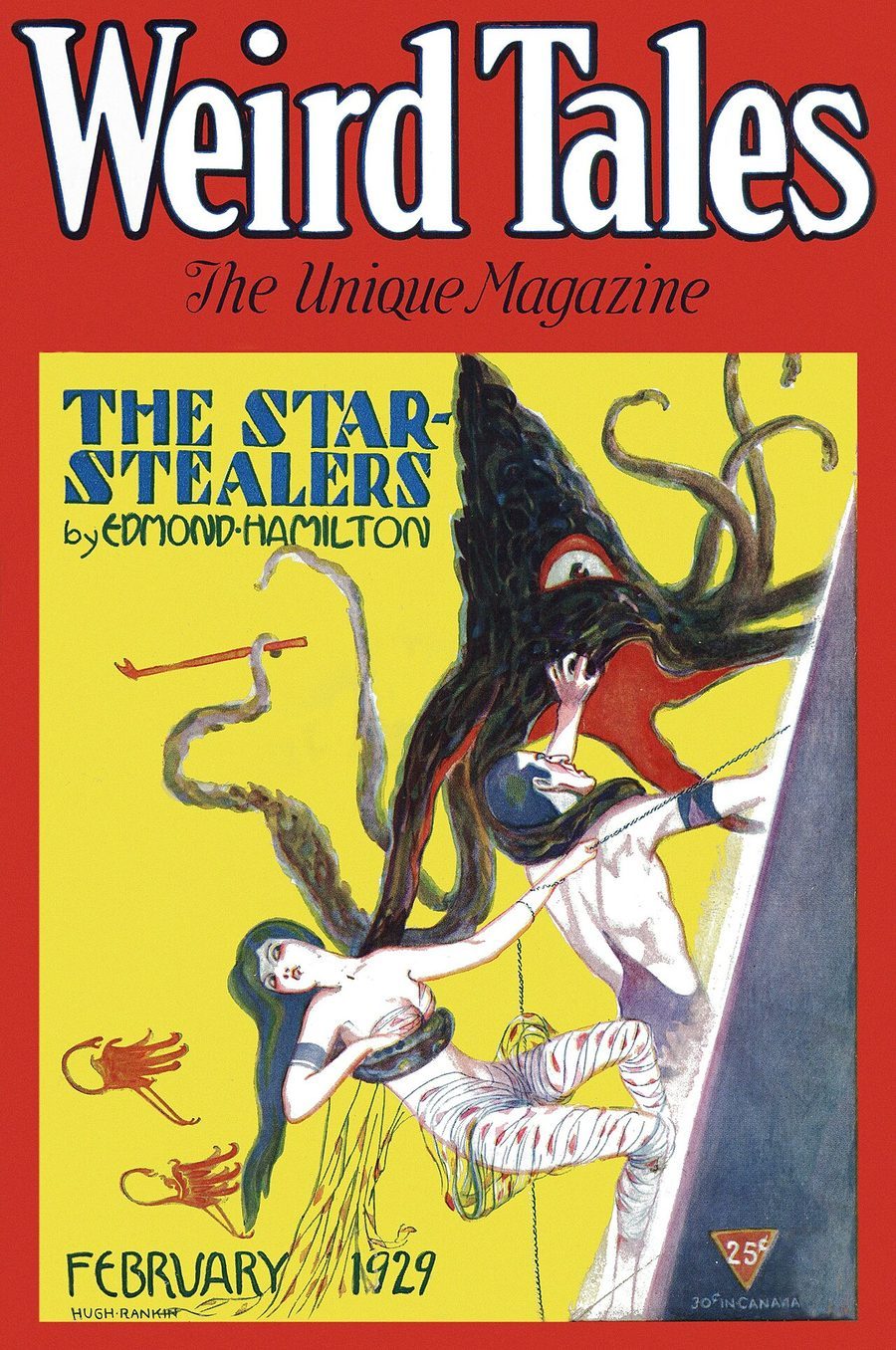
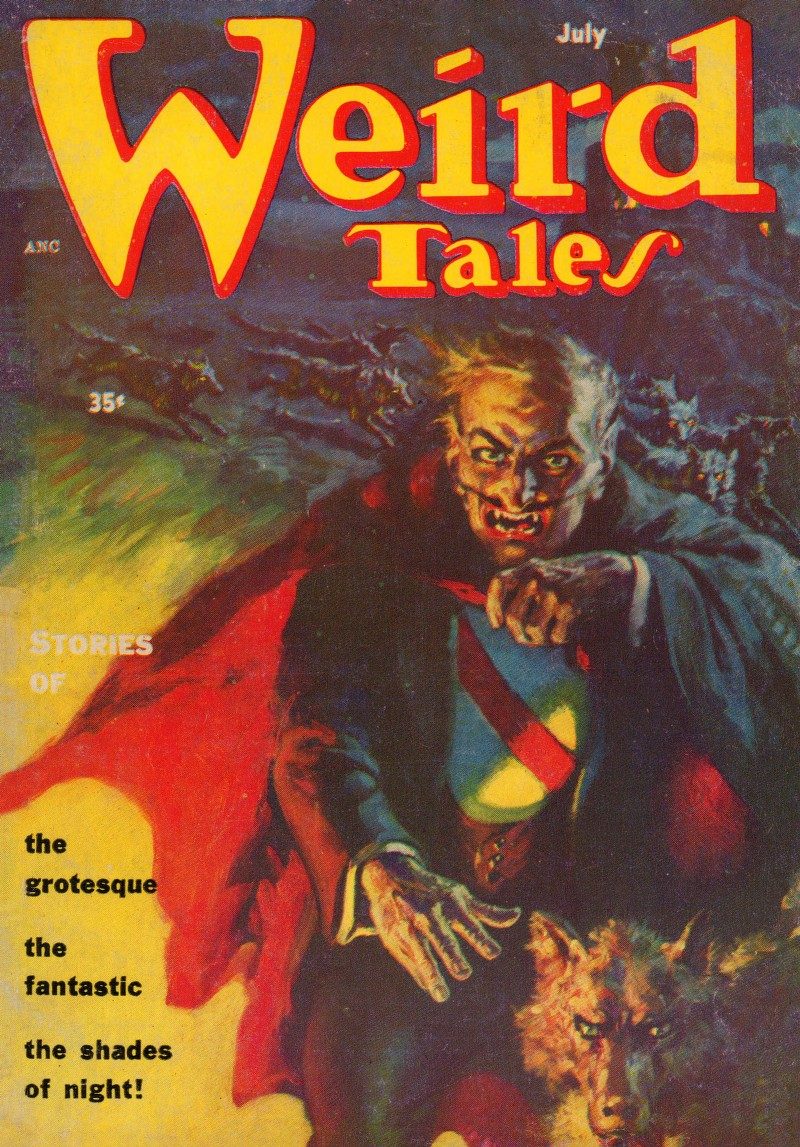
L’Abomination de Dunwich — Weird Tales, 1929 (numéro de l’année, pas forcément celui-ci) · Le Survivant — Weird Tales, juillet 1954
Fiches qui renvoient ici
Le Necronomicon · Wilbur Whateley