Rapport
4 œuvres sur 222, 5 occurrences — 89ᵉ entité la plus citée du wiki sur 139. Parutions transcrites de 1933 (Postcard from H. P. Lovecraft to Clark Ashton Smith) à 1954 (Le Survivant). (dates des numéros transcrits, posthumes comprises.) Le foyer est Celui qui hantait les ténèbres : 2 occurrences, 40 % du total. Densité : 2,6 occurrences pour 10 000 mots dans les œuvres concernées. Voisine surtout Unaussprechlichen Kulten : 6 rapprochements dans un même passage. 1 fiche du wiki y renvoie.
Le « comte d’Erlette » est une francisation plaisante du nom de famille de Derleth. Le grimoire est donc une signature amicale glissée dans la bibliographie interdite.
Attestations dans le corpus
| Œuvre | Année | Occurrences | Part |
|---|---|---|---|
| Celui qui hantait les ténèbres | 1936 | 2 | 40 % |
| Postcard from H. P. Lovecraft to Clark Ashton Smith | 1933 | 1 | 20 % |
| The Battle That Ended the Century | 1934 | 1 | 20 % |
| Le Survivant | 1954 | 1 | 20 % |
| Total | 5 |
Ce que le corpus en dit
Une phrase par œuvre, prise à l’endroit de la première occurrence.
He had himself read many of them—a Latin version of the abhorred Necronomicon, the sinister Liber Ivonis, the infamous Cultes des Goules of Comte d’Erlette, the Unaussprechlichen Kulten of von Junzt, and old Ludvig Prinn’s hellish De Vermis Mysteriis.
— Celui qui hantait les ténèbres, 2 occurrences
I shall be interested to see how far the “Lady” comes toward justifying the intemperate admiration of Comte d’Erlette & Jehvish-Ei.
Throughout the event notes were taken by M. le Comte d’Erlette for a 200-volume novel-cycle in the Proustian manner, to be entitled Morning in September, with illustrations by Mrs.
I had at that time no understanding of the meaning of such a title as Unaussprechlichen Kulten, by Von Junzt, though I suspected that it was akin to the Count d’Erlette’s Cultes des Goules, since it stood next to that book on the shelf.
Rencontres dans le texte
Entités dont une occurrence figure à moins de 320 signes de celle-ci — même phrase ou phrase voisine.
… himself read many of them—a Latin version of the abhorred Necronomicon, the sinister Liber Ivonis, the infamous Cultes des Goules of Comte d’Erlette, the Unaussprechlichen Kulten of von Junzt, and old Ludvig Prinn’s hellish De Vermis Mysteriis. But there were others he had known merely by reputation or not at all—the Pnakotic Manuscripts, the Book of Dzyan, and a crumbling volume of wholly unidentifiable characters yet with certain symbols and diagrams shudderingly …
— Celui qui hantait les ténèbres, avec Les Manuscrits pnakotiques
Croisements
Entités qui partagent ses œuvres, les plus spécifiques d’abord ; entre parenthèses, le nombre d’œuvres communes.
Personnages — Capitaine Obed Marsh (1), Walter Gilman (1), Robert Blake (1)
Divinités — Yog-Sothoth (2), Dagon (1), Nyarlathotep (1), Azathoth (1), Shub-Niggurath (1), Cthulhu (1)
Créatures — Les Profonds (1), Les Goules (2), Les Grands Anciens (1)
Lieux — Le Récif du Diable (1), Providence (2), Les Contrées du Rêve (1), L’Antarctique (1), Innsmouth (1), La Nouvelle-Orléans (1), Yuggoth (1), Arkham (1)
Objets — De Vermis Mysteriis (2), Le Trapézoèdre brillant (1), Unaussprechlichen Kulten (2), Les Manuscrits pnakotiques (2), Le Livre d’Eibon (1), Le Necronomicon (1)
Cycles — Le mythe comme œuvre collective (1), Le mythe de Cthulhu (1)
Entourage — August Derleth (1), Clark Ashton Smith (2)
Dans les revues
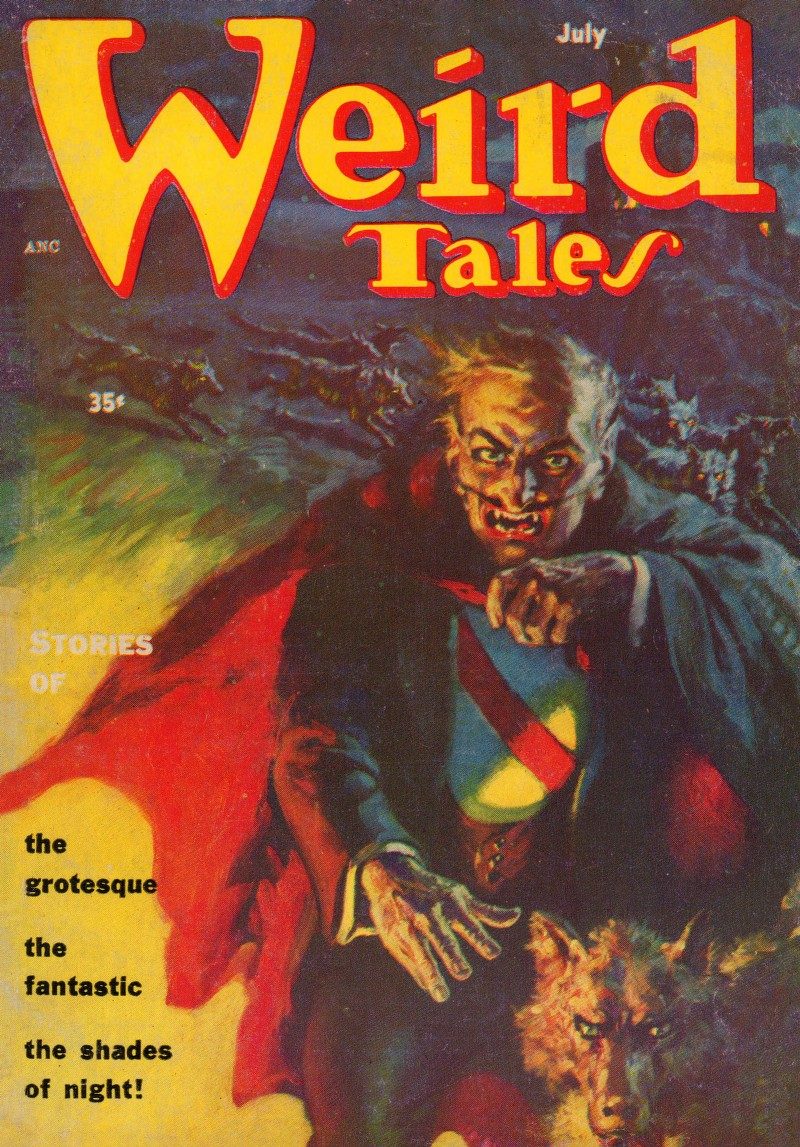
Le Survivant — Weird Tales, juillet 1954