Rapport
6 œuvres sur 222, 8 occurrences — 80ᵉ entité la plus citée du wiki sur 139. Parutions transcrites de 1932 (L’Homme de pierre) à 1937 (Le Monstre sur le seuil). (dates des numéros transcrits, posthumes comprises.) Le foyer est L’Homme de pierre : 3 occurrences, 38 % du total. Densité : 1,3 occurrence pour 10 000 mots dans les œuvres concernées. Voisine surtout Unaussprechlichen Kulten : 6 rapprochements dans un même passage. 1 fiche du wiki y renvoie.
Le Livre d’Eibon vient de Smith ; Lovecraft l’a cité, ce qui l’a fait entrer dans le canon commun. Cette circulation de références entre correspondants est le mécanisme qui a transformé une série de nouvelles en mythologie partagée.
Attestations dans le corpus
| Œuvre | Année | Occurrences | Part |
|---|---|---|---|
| L’Homme de pierre | 1932 | 3 | 38 % |
| Hors du temps | 1933 | 1 | 12 % |
| Les Rêves dans la maison de la sorcière | 1933 | 1 | 12 % |
| Celui qui hantait les ténèbres | 1936 | 1 | 12 % |
| L’Horreur dans le musée | 1933 | 1 | 12 % |
| Le Monstre sur le seuil | 1937 | 1 | 12 % |
| Total | 8 |
Ce que le corpus en dit
Une phrase par œuvre, prise à l’endroit de la première occurrence.
“The soldiers never got his Book of Eibon when they burned his house, and his grandson, William Van Kauran, brought it over when he came to Rensselaerwyck and later crossed the river to Esopus.
— L’Homme de pierre, 3 occurrences
It is true that a few scholars, unusually versed in the literature of occultism and magic, found vague resemblances between some of the hieroglyphs and certain primal symbols described or cited in two or three very ancient, obscure, and esoteric texts such as the Book of Eibon, reputed to descend from forgotten Hyperborea; the Pnakotic fragments, alleged to be pre-human; and the monstrous and forbidden Necronomicon of the mad Arab Abdul Alhazred.
But all these precautions came late in the day, so that Gilman had some terrible hints from the dreaded Necronomicon of Abdul Alhazred, the fragmentary Book of Eibon, and the suppressed Unaussprechlicken Kulten of von Junzt to correlate with his abstract formulae on the properties of space and the linkage of dimensions known and unknown.
He had himself read many of them—a Latin version of the abhorred Necronomicon, the sinister Liber Ivonis, the infamous Cultes des Goules of Comte d’Erlette, the Unaussprechlichen Kulten of von Junzt, and old Ludvig Prinn’s hellish De Vermis Mysteriis.
Others were drawn from darker and more furtively whispered cycles of subterranean legend—black, formless Tsathoggua, many-tentacled Cthulhu, proboscidian Chaugnar Faugn, and other rumored blasphemies from forbidden books like the Necronomicon, the Book of Eibon, or the Unaussprechlichen Kulten of von Junzt.
He read things like the frightful Book of Eibon, the Unaussprechlichen Kulten of von Junzt, and the forbidden Necronomcon of the mad Arab Abdul Alhazred, though he did not tell his parents he had seen them.
Rencontres dans le texte
Entités dont une occurrence figure à moins de 320 signes de celle-ci — même phrase ou phrase voisine.
Croisements
Entités qui partagent ses œuvres, les plus spécifiques d’abord ; entre parenthèses, le nombre d’œuvres communes.
Personnages — Asenath Waite (1), Ephraim Waite (1), Keziah Mason (1), Richard Upton Pickman (2), Abdul Alhazred (3), Edward Pickman Derby (1)
Divinités — Shub-Niggurath (5), Tsathoggua (3), Azathoth (4), Ghatanothoa (1), Rhan-Tegoth (1), Nyarlathotep (2), Nug et Yeb (1), Yog-Sothoth (2)
Créatures — Brown Jenkin (1), Les Grands Anciens (2)
Lieux — Yuggoth (3), Innsmouth (2), Le plateau de Leng (2), Le Pacifique Sud (2), Université Miskatonic (2)
Objets — Unaussprechlichen Kulten (5), Le Necronomicon (5), Le Trapézoèdre brillant (1), Les Manuscrits pnakotiques (3)
Thématiques — La conscience emprisonnée (2), L’architecture non euclidienne (1), Ce qui n’est pas une représentation (1)
Époques — La Nouvelle-Angleterre coloniale (1)
Cycles — Les révisions (2)
Dans les revues
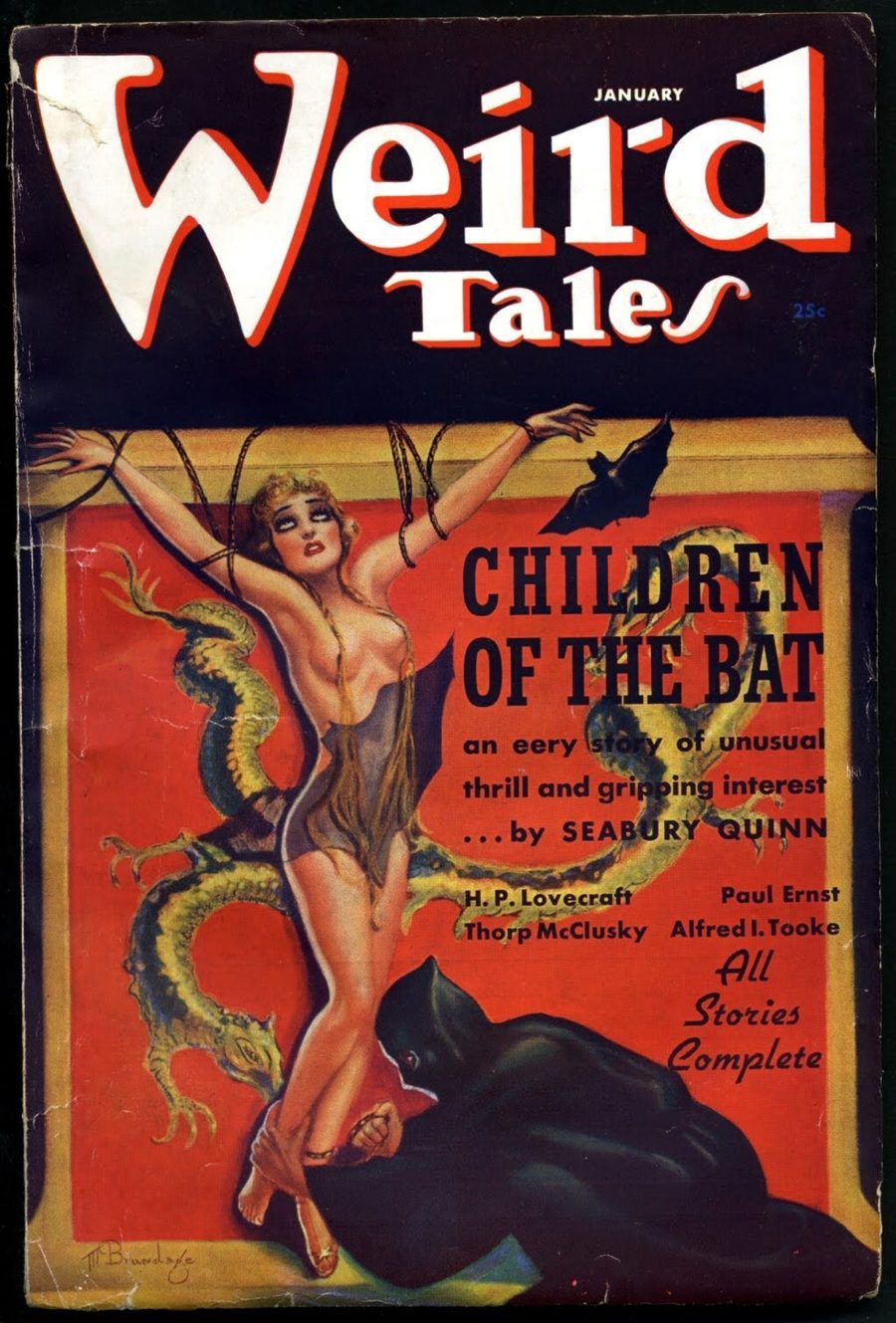
Le Monstre sur le seuil — Weird Tales, janvier 1937