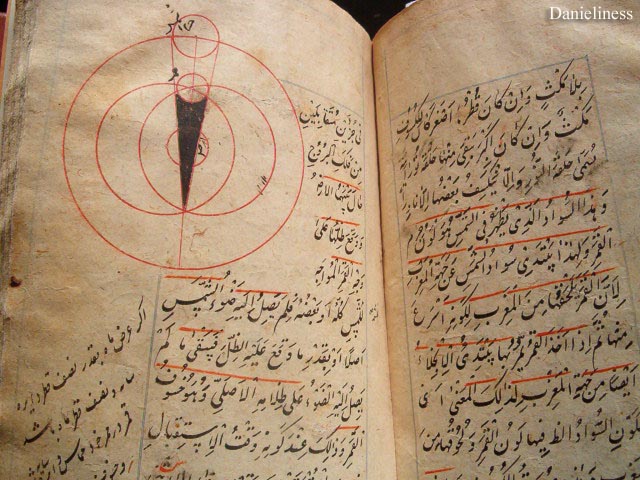
Manuscrit arabe medieval, le genre de source qu’invoque l’Al Azif — Danieliness at English Wikipedia · Public domain · Commons

Rapport
14 œuvres sur 222, 19 occurrences — 55ᵉ entité la plus citée du wiki sur 139. Parutions transcrites de 1928 (L’Appel de Cthulhu) à 1971 (L’Affaire Charles Dexter Ward), sur 11 œuvres datées. (dates des numéros transcrits, posthumes comprises.) Le foyer est History of the Necronomicon : 3 occurrences, 16 % du total. Densité : 1,1 occurrence pour 10 000 mots dans les œuvres concernées. Voisine surtout Le Necronomicon : 20 rapprochements dans un même passage. 3 fiches du wiki y renvoient.
Lovecraft disait avoir inventé ce nom à cinq ans, en jouant aux Mille et Une Nuits. Alhazred aurait vécu au VIIIe siècle, séjourné dans le désert d’Irem, et écrit à Damas l’Al Azif que les Grecs traduiront sous le titre de Necronomicon.
Sa mort — saisi et dévoré par un monstre invisible en plein midi, devant témoins — est un détail typique : l’horreur lovecraftienne ne préfère pas la nuit.
Attestations dans le corpus
| Œuvre | Année | Occurrences | Part |
|---|---|---|---|
| History of the Necronomicon | — | 3 | 16 % |
| La Cité sans nom | 1938 | 3 | 16 % |
| Letter to Clark Ashton Smith, November 27, 1927 | — | 2 | 11 % |
| Autobiography | 1943 | 1 | 5 % |
| Hors du temps | 1933 | 1 | 5 % |
| L’Appel de Cthulhu | 1928 | 1 | 5 % |
| L’Affaire Charles Dexter Ward | 1971 | 1 | 5 % |
| Le Descendant | 1938 | 1 | 5 % |
| Les Rêves dans la maison de la sorcière | 1933 | 1 | 5 % |
| L’Abomination de Dunwich | 1929 | 1 | 5 % |
| Le Molosse | — | 1 | 5 % |
| Le Monstre sur le seuil | 1937 | 1 | 5 % |
| Celui qui chuchotait dans les ténèbres | 1931 | 1 | 5 % |
| À travers les portes de la Clef d’argent | 1951 | 1 | 5 % |
| Total | 19 |
Ce que le corpus en dit
Une phrase par œuvre, prise à l’endroit de la première occurrence.
Composed by Abdul Alhazred, a mad poet of Sanaá, in Yemen, who is said to have flourished during the period of the Ommiade caliphs, circa 700 A.D.
— History of the Necronomicon, 3 occurrences
It was of this place that Abdul Alhazred the mad poet dreamed on the night before he sang his unexplainable couplet: That is not dead which can eternal lie, And with strange eons, even death may die.
— La Cité sans nom, 3 occurrences
In particular I have drawn up some data on the celebrated & unmentionable Necronomicon of the mad Arab Abdul Alhazred!
— Letter to Clark Ashton Smith, November 27, 1927, 2 occurrences
When I was five the Arabian Nights claimed me, and I spent hours in playing Arab—calling myself “Abdul Alhazred,” which some kindly elder had suggested to me as a typical Saracen name.
It is true that a few scholars, unusually versed in the literature of occultism and magic, found vague resemblances between some of the hieroglyphs and certain primal symbols described or cited in two or three very ancient, obscure, and esoteric texts such as the Book of Eibon, reputed to descend from forgotten Hyperborea; the Pnakotic fragments, alleged to be pre-human; and the monstrous and forbidden Necronomicon of the mad Arab Abdul Alhazred.
No book had ever really hinted of it, though the deathless Chinamen said that there were double meanings in the Necronomicon of the mad Arab Abdul Alhazred which the initiated might read as they chose, especially the much-discussed couplet: “That is not dead which can eternal lie, And with strange eons even death may die.”
Rencontres dans le texte
Entités dont une occurrence figure à moins de 320 signes de celle-ci — même phrase ou phrase voisine.
Chronology Al Azif written circa 730 A.D. at Damascus by Abdul Alhazred Tr to Greek A.D. 950 as Necronomicon by Theodorus Philetas Burnt by Patriarch Michael 1050 (i.e., Greek Text)—Arabic text now lost Olaus translates Gr. to Latin 1228 1232 Latin ed. (and Gr.) suppr. by Pope Gregory IX 14 …
But all these precautions came late in the day, so that Gilman had some terrible hints from the dreaded Necronomicon of Abdul Alhazred, the fragmentary Book of Eibon, and the suppressed Unaussprechlicken Kulten of von Junzt to correlate with his abstract formulae on the properties of space and the linkage of dimensions known and unknown.
— Les Rêves dans la maison de la sorcière, avec Le Livre d’Eibon
He read things like the frightful Book of Eibon, the Unaussprechlichen Kulten of von Junzt, and the forbidden Necronomcon of the mad Arab Abdul Alhazred, though he did not tell his parents he had seen them. Edward was twenty when my son and only child was born, and seemed pleased when I named the newcomer Edward Derby Upton, after him.
Croisements
Entités qui partagent ses œuvres, les plus spécifiques d’abord ; entre parenthèses, le nombre d’œuvres communes.
Personnages — Richard Upton Pickman (4), Harley Warren (3)
Divinités — Yog-Sothoth (7), Cthulhu (7), Shub-Niggurath (5), Tsathoggua (3), Yig (2)
Créatures — Les Grands Anciens (4), Les Anciens (3)
Lieux — Arkham (8), Université Miskatonic (6), Salem (7), Irem (4), La Nouvelle-Orléans (4), Boston (7), Le plateau de Leng (4), Yuggoth (4)
Objets — Le Necronomicon (13), Le Livre d’Eibon (3), Unaussprechlichen Kulten (3)
Thématiques — La conscience emprisonnée (3), Le document comme preuve (3), L’architecture non euclidienne (2), Le cosmicisme (3), Le savoir interdit (3)
Époques — La Nouvelle-Angleterre coloniale (2)
Cycles — Le mythe de Cthulhu (3)
Dans les revues
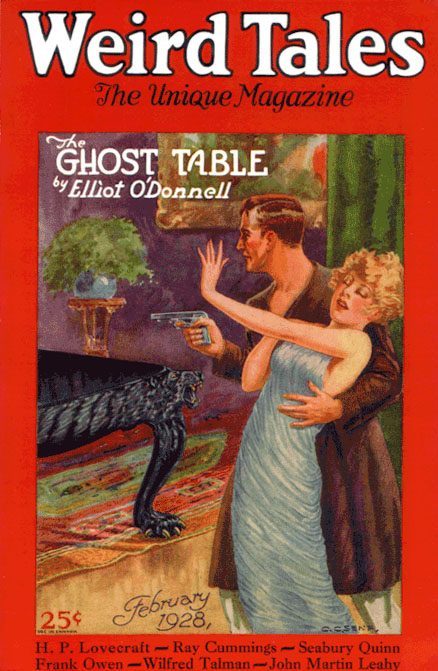
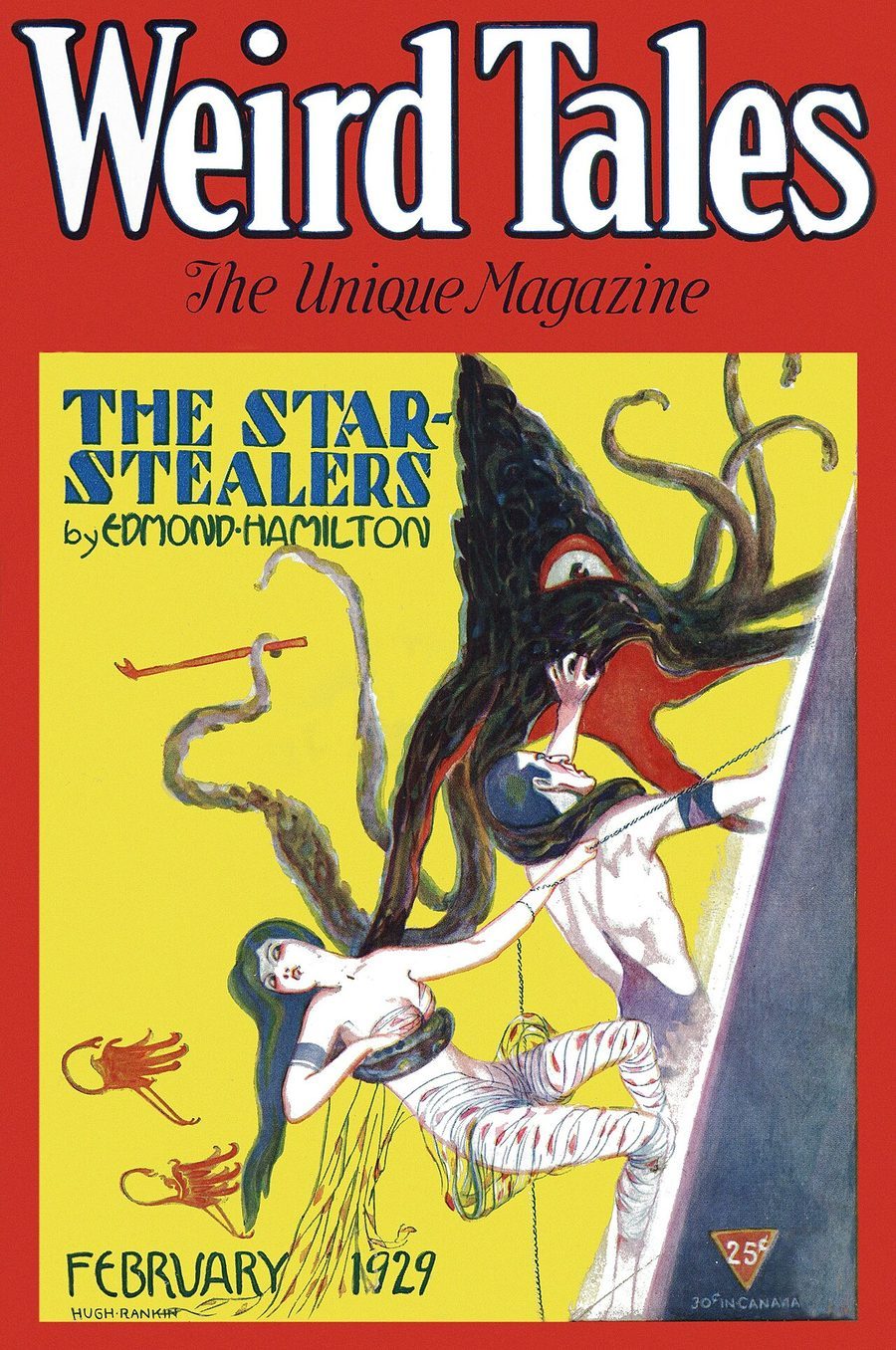
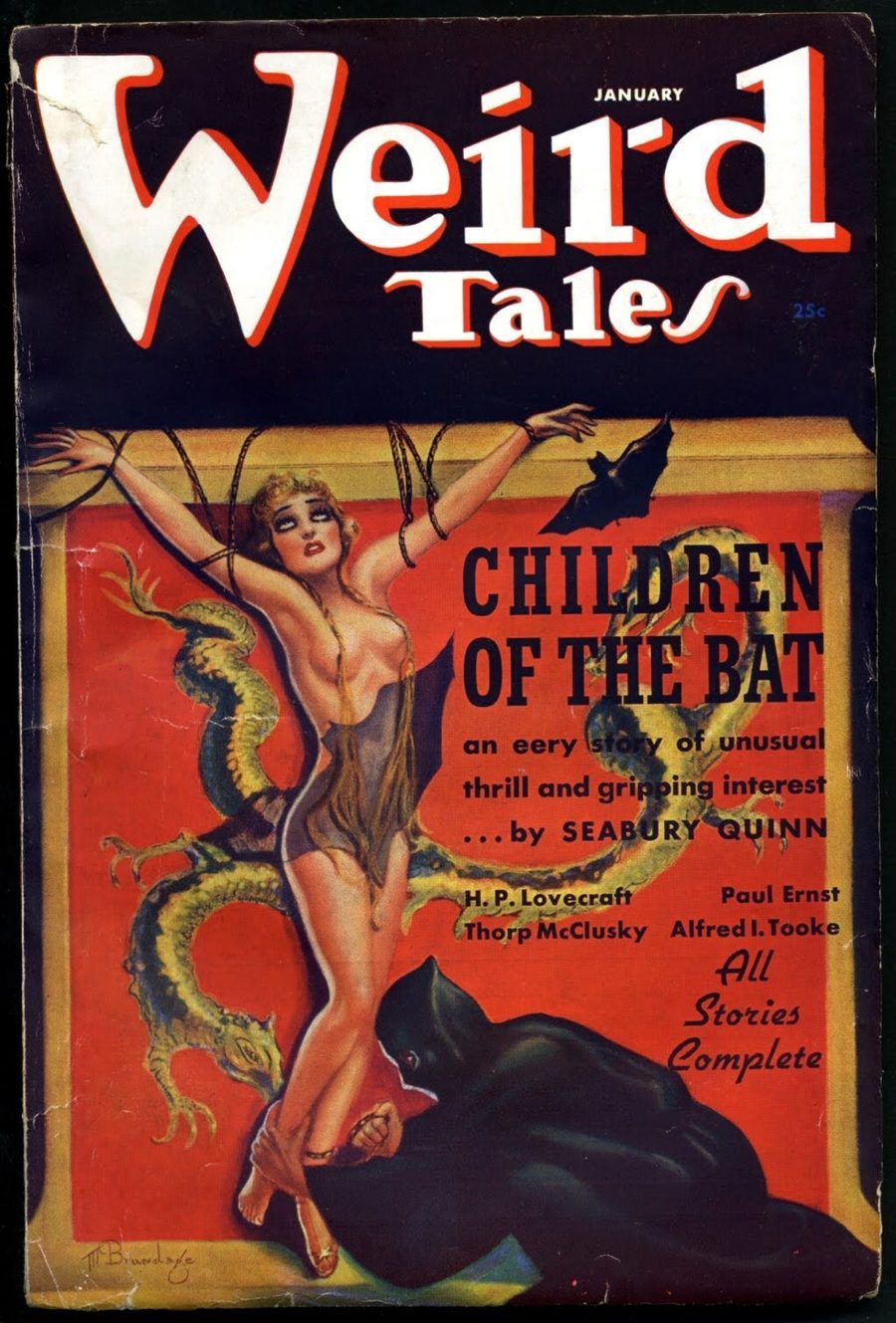
L’Appel de Cthulhu — Weird Tales, 1928 (numéro de l’année, pas forcément celui-ci) · L’Abomination de Dunwich — Weird Tales, 1929 (numéro de l’année, pas forcément celui-ci) · Le Monstre sur le seuil — Weird Tales, janvier 1937
Fiches qui renvoient ici
Irem · La Cité sans nom · Le Necronomicon